PolyTrack Winter 1 Speedrun Guide: Conquering Ice Physics
Welcome to winter. Everything you learned on Summer tracks still applies—the racing line, the air control, the momentum management. But now there's a catch: the ground is trying to betray you.
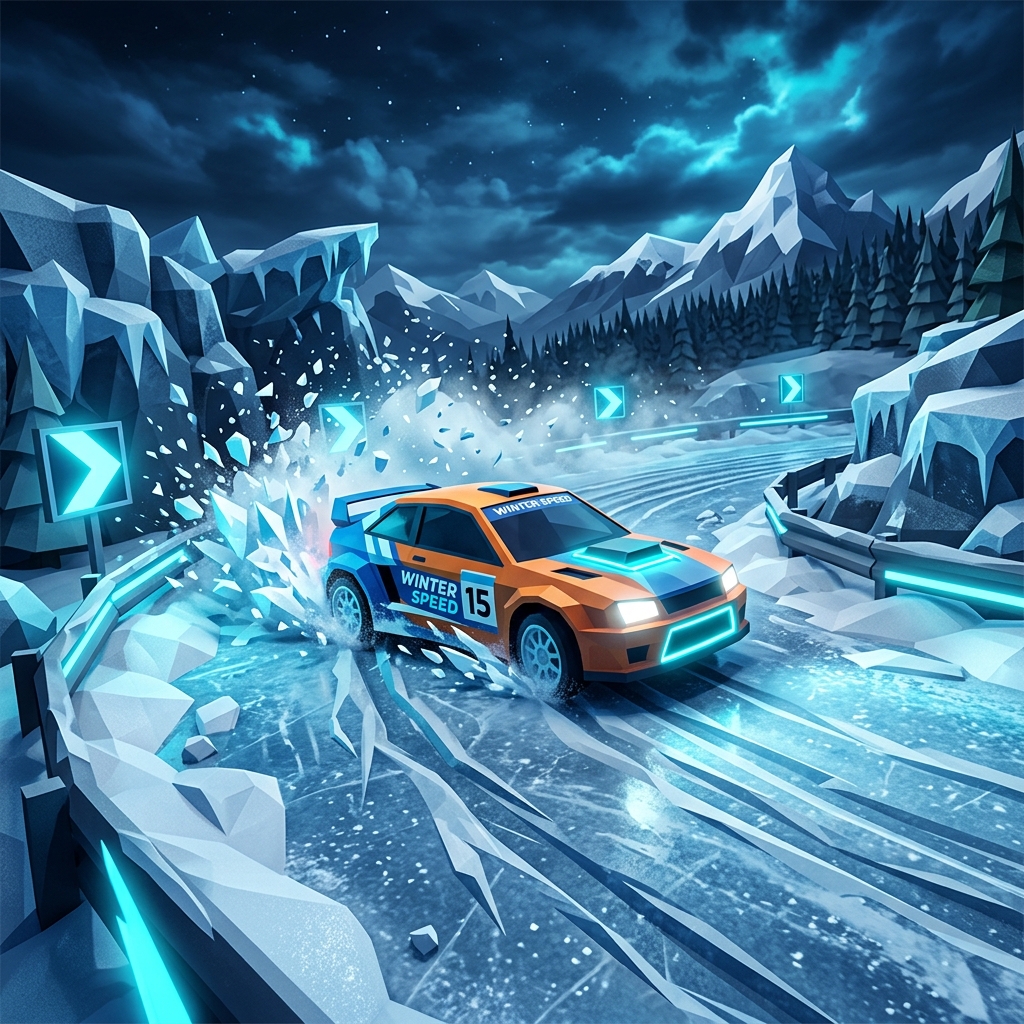
Winter tracks introduce reduced grip surfaces. Your car slides more, turns wider, and brakes slower. The instinct to drive the same way as Summer will produce spectacular failures. Winter 1 is the training ground for ice adaptation, and mastering it opens the door to the most technically demanding tracks in the game.
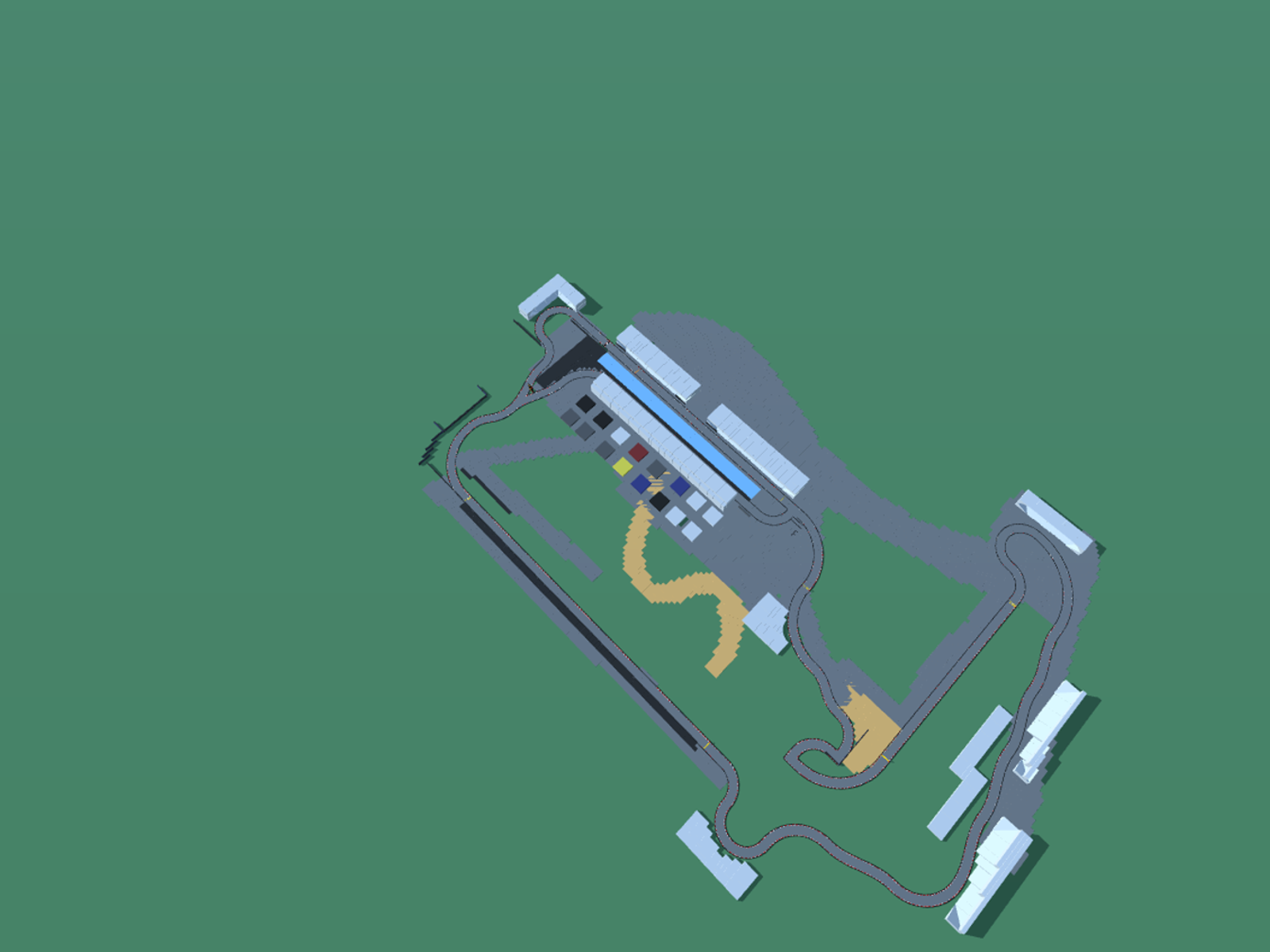
Track Overview
| Property | Detail |
|---|---|
| Environment | Winter (snow, ice patches, low grip) |
| Estimated Length | ~250 meters |
| Checkpoints | 3 |
| Key Features | Low-grip surfaces, banked curves on ice, 1 moderate jump with icy landing |
| Difficulty | Medium |
| WR Reference | ~10-14 seconds |
Winter 1 is deliberately simpler in layout than Summer 3. Kodub understood that introducing new physics required reducing geometric complexity. The track itself has fewer turns and obstacles—but each one is harder because of the ice.
Understanding Ice Physics
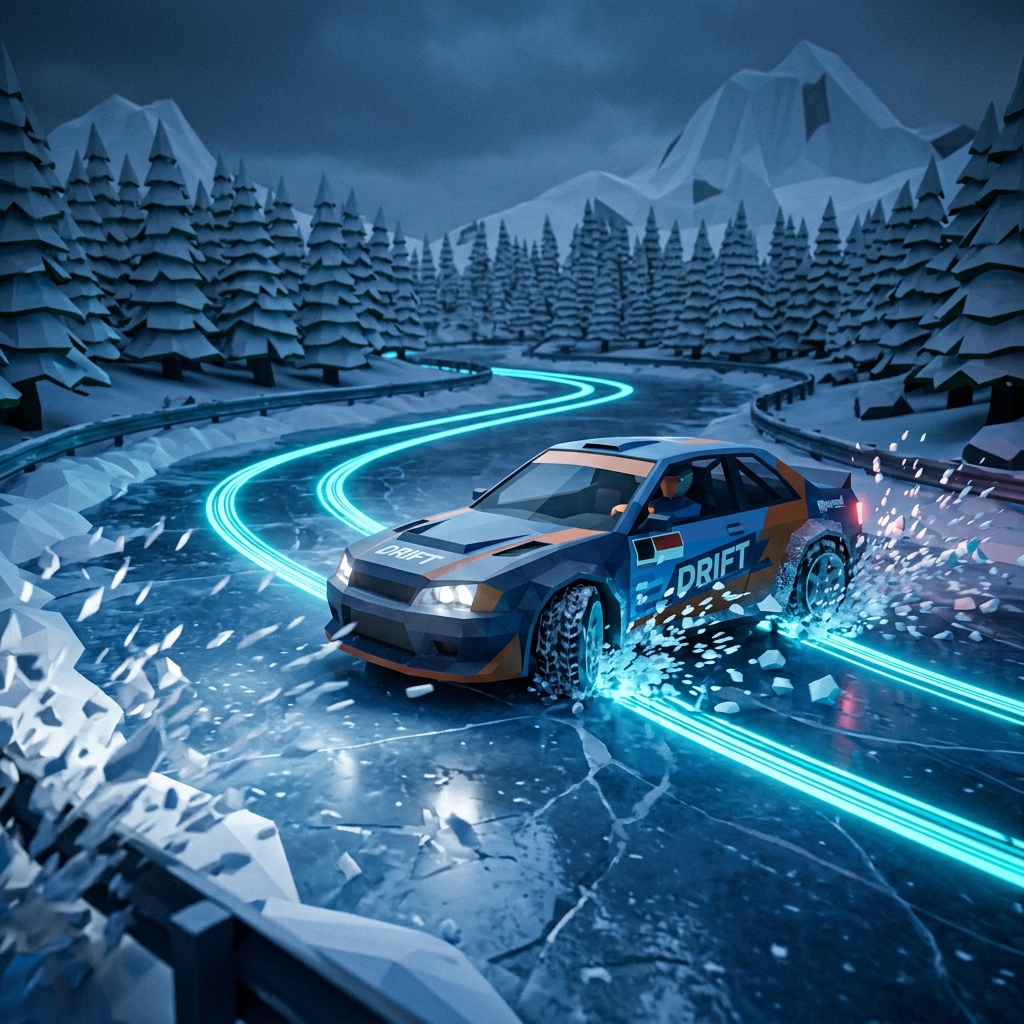
Before the sector breakdown, you need to understand what ice changes mechanically:
| Property | Summer Tracks | Winter Tracks |
|---|---|---|
| Steering response | Immediate | Delayed (car continues sliding in original direction) |
| Braking distance | Short | 2-3x longer |
| Cornering speed | High (good grip) | Lower (reduced grip, wider turning radius) |
| Drift initiation | Requires Spacebar | Can happen accidentally from steering alone |
| Landing stability | Good | Car may slide sideways after landing |
The fundamental shift: On Summer tracks, you think about speed. On Winter tracks, you think about traction. Speed is meaningless if your car is sliding sideways into a wall.
Sector-by-Sector Breakdown
Sector 1: The Icy Opening
The first section introduces ice gradually. The road may start with partial grip before transitioning to full ice.
Key adaptation: Start turning earlier than you would on Summer. On ice, there's a delay between steering input and actual directional change—your car's momentum carries it in the original direction for a brief moment before the new steering takes effect.
Optimal line:
- Approach turns 1-2 car lengths earlier than on Summer tracks.
- Use gentler steering inputs. Full-lock steering on ice causes oversteer (the rear slides out).
- Accept a slightly wider line. Trying to cut a tight apex on ice leads to understeer → wall contact → catastrophic speed loss.
Golden rule: On ice, it's always better to go slightly slower through a corner and maintain control than to go fast and lose the car.
Sector 2: The Banked Ice Corner
Winter 1 typically includes a banked (tilted) corner on ice. This combination is tricky because banking normally provides extra grip—but ice reduces the benefit significantly.
How to read it:
- The banking helps, but less than you'd expect.
- Treat it as a medium-grip corner rather than a high-grip one.
- If the banking is severe enough, you can take it faster than a flat ice corner—but not as fast as a banked Summer corner.
Technique: Let the car settle into the bank naturally. Don't fight the car's tendency to slide toward the outside—gentle steering correction is enough. Overcorrecting causes snap oversteer.
Sector 3: The Winter Jump
Jumping on Winter tracks adds a new variable: the landing surface is slippery.
A perfect landing on Summer restores full grip immediately. A perfect landing on ice means you're still sliding slightly—and any residual roll or yaw from the jump gets amplified by the ice.
Approach:
- Standard air control: match pitch to landing angle, zero roll.
- Critical addition: Ensure zero steering input at the moment of landing. On Summer, you can steer immediately after landing. On ice, any steering at the moment of touchdown causes the car to slide sideways.
- Wait 0.3-0.5 seconds after landing before applying steering input. Let the car settle and establish what limited traction it can.
The ice landing rule: Land first. Grip second. Steer third.
Key Techniques for Winter Tracks
1. Anticipatory Steering
On Summer, you steer when you see the corner. On Winter, you steer before you see the corner. This means memorizing the track layout is even more important—you can't react to corners in real-time on ice; you must anticipate them.
After 5-10 practice runs, you should know exactly where every turn is. Then start turning 1-2 car lengths before the visual corner begins.
2. The Ice Drift vs. Controlled Turn
On ice, there's a spectrum between "controlled turn" and "full drift." The fastest approach varies by corner:
- Gentle curves: Controlled turn with early, gentle steering. No Spacebar needed—the ice provides enough natural slide.
- Tight corners: Controlled drift. Tap Spacebar to initiate a deliberate slide, then manage it with counter-steering. On ice, the car drifts further and longer than on Summer, so your Spacebar tap should be briefer.
- Hairpins: Full commitment drift. Spacebar + hard steering + throttle management. Accept that you'll lose speed; the goal is not crashing.
3. Throttle Feathering
On Summer tracks, you hold W (full throttle) almost constantly. On Winter tracks, full throttle through corners causes wheel spin, which reduces grip further.
Technique: In icy corners, tap W rhythmically instead of holding it. Each tap maintains some speed without overwhelming the available traction. Think of it as pumping the gas rather than flooring it.
Common Mistakes & Fixes
| Mistake | Why It Happens | Fix |
|---|---|---|
| Overcorrecting slides | Panicking when the car drifts wide | Gentle corrections only; ice punishes aggressive input |
| Braking too late | Using Summer braking points on ice | Brake 2-3x earlier than you would on Summer |
| Steering during landing | Trying to turn immediately after a jump | Wait 0.3s after landing before any steering input |
| Full throttle in corners | Summer habits carrying over | Feather the throttle; tap W instead of holding it |
Speed Progression Milestones
| Level | Target Time | What It Means |
|---|---|---|
| 🟢 First Completion | 30-45 seconds | You survived ice. That's an achievement. |
| 🟡 Beginner | 20-30 seconds | You're adapting to reduced grip |
| 🟠 Intermediate | 14-20 seconds | Anticipatory steering is working; ice drifts are controlled |
| 🔴 Advanced | 11-14 seconds | Throttle feathering mastered; clean landings on ice |
| 🏆 World Record Tier | <11 seconds | Exploiting ice drift for cornering speed advantage |
Practice Drills
Drill 1: The Slow Lap Complete Winter 1 at half your normal speed. Focus exclusively on keeping the car perfectly centered on the track with no wall contact. This builds ice-handling intuition faster than aggressive driving.
Drill 2: Braking Distance Test Accelerate to full speed on a straight section, then brake. Note how far the car travels before stopping. Do this on Summer 1, then Winter 1. The difference teaches your instincts how much earlier to brake on ice.
Drill 3: Corner Entry Timing Pick the hardest corner on Winter 1. Do 15 consecutive runs focusing only on that corner. Experiment with different entry timing: too early, too late, and optimal. Once you find the sweet spot, it clicks permanently.
Frequently Asked Questions
Why do I keep sliding off Winter 1 when Summer felt fine? Winter surfaces have reduced grip, so the car turns wider, brakes slower, and slides more. The same inputs that worked on Summer are simply too aggressive here. Soften everything — gentler steering, earlier braking, feathered throttle — and the track becomes manageable.
How much earlier do I actually need to brake on ice? Roughly two to three times earlier than your Summer braking points. The quickest way to calibrate is the braking-distance drill above: brake from full speed on Summer 1, then on Winter 1, and feel the difference so your instincts adjust.
Why does my car spin out right after the jump landing? You're almost certainly steering too early. On the icy landing the tires have little grip the instant you touch down. Wait about a third of a second after landing before any steering input, then ease into the turn.
Should I avoid sliding completely? While you're learning, yes — keep the car gripped and centered. But at the top end, controlled ice drift becomes a cornering advantage: world-record runs deliberately use a measured slide to rotate through corners faster than pure grip allows. Walk before you run.
Keyboard or arrow keys for ice? Either — the physics are identical. What matters on ice is input size, not which keys you press. Small, smooth corrections beat fast ones every time. The Controls Cheatsheet has the full mapping.
What's Next
- Winter 2 Speedrun Guide — Longer ice sections, more complex geometry
- Summer 3 Speedrun Guide — Compare your technique on familiar grip
- Drift Techniques Guide — Ice drifting demands deeper skills
- Browse Winter Community Tracks — Test your ice skills on player-created frozen courses